Quick Facts
- Category: Technology
- Published: 2026-05-01 05:14:29
- Ubuntu 26.04 LTS 'Resolute Raccoon' Arrives as First Wayland-Only Long-Term Support Release
- Meta's BOxCrete: Revolutionizing U.S. Concrete Mix Design with AI
- Breaking: Yozma IN 10 Electric Dirt Bike Hits Record $999 Low Amid Major EcoFlow and Anker Power Station Sales
- Supreme Court Ruling in Louisiana v. Callais Threatens Voting Rights and Environmental Justice, Sierra Club Warns
- The Story Behind 42i: A Name with Layers of Meaning
Meta’s AI Innovation for Concrete Mix Design
Meta has taken a significant step forward in its long-term roadmap to assist the construction industry by leveraging artificial intelligence (AI) to create high-quality, more sustainable concrete mixes—with a specific focus on those produced entirely within the United States. At the 2026 American Concrete Institute (ACI) Spring Convention, the company unveiled Bayesian Optimization for Concrete (BOxCrete), a new AI model designed to streamline concrete mix design. The model, along with the foundational data used to develop award-winning concrete formulations, is now available as an open-source resource on GitHub.
What Is BOxCrete?
BOxCrete employs Bayesian optimization—a machine learning technique that efficiently explores complex parameter spaces—to predict optimal concrete mix compositions. This approach reduces the need for extensive trial-and-error testing in the lab, allowing engineers to quickly identify combinations that meet performance requirements, sustainability goals, and cost constraints. By releasing the model and data openly, Meta aims to accelerate innovation across the entire concrete industry, from small suppliers to large-scale producers.
The Challenge of Cement Imports in the U.S.
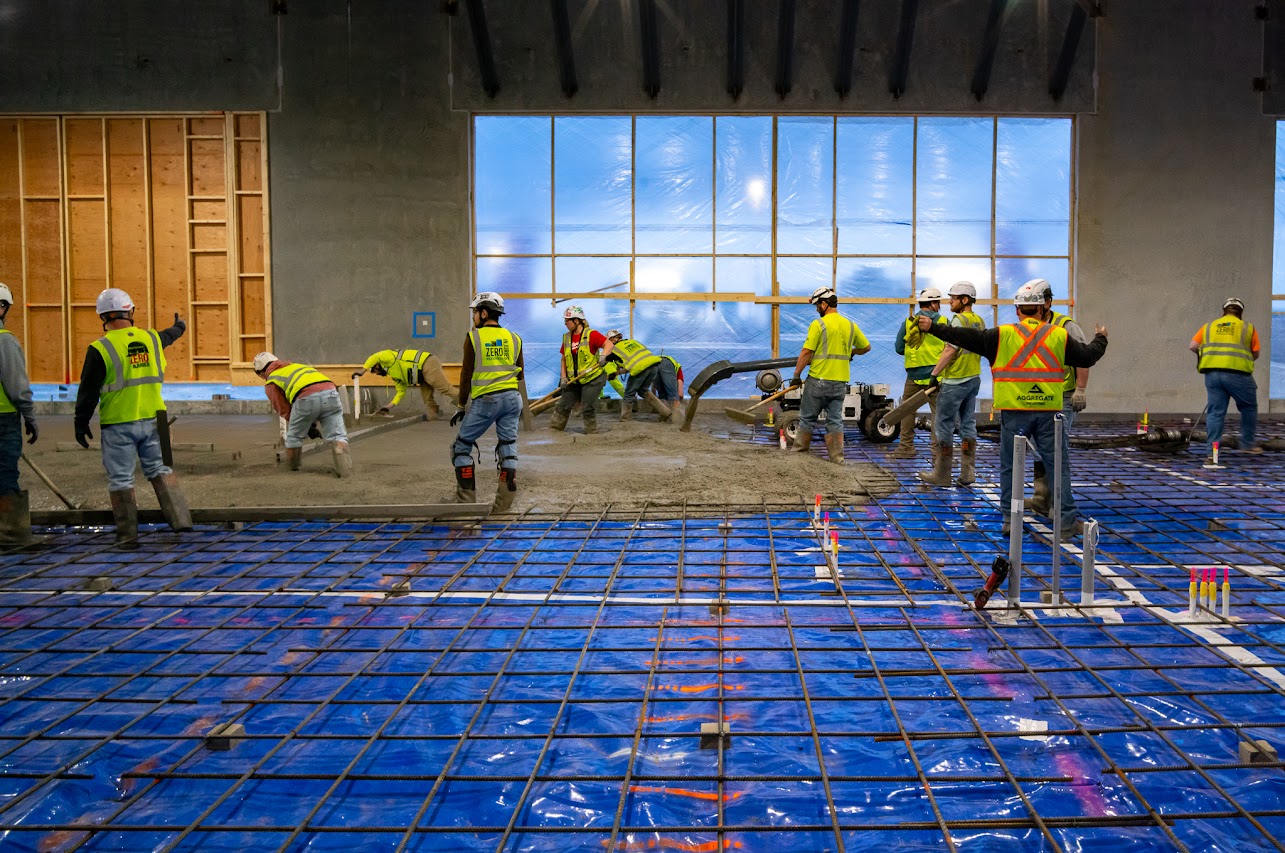
Every year, the United States pours roughly 400 million cubic yards of concrete—enough to pave a two-lane highway circling the Earth multiple times. Concrete forms the backbone of bridges, data centers, highways, and homes. However, a critical vulnerability exists: while ready-mix concrete is typically produced domestically, 20–25% of the cement used in it is imported. This reliance on foreign cement can disrupt supply chains, hinder U.S. manufacturing, and limit job creation. Moreover, cement produced abroad does not always comply with U.S. performance and environmental standards, creating quality inconsistencies.
Economic Impact of Reshoring
Domestic production of materials—often called reshoring—has proven to be a powerful economic driver. Since 2020, reshoring and related foreign direct investment (FDI) have brought over 1.1 million jobs back to the U.S. Manufacturing boasts one of the highest economic multipliers: every $1.00 spent in manufacturing adds $2.69 to the U.S. economy. The cement and concrete sector alone contributes more than $130 billion annually and supports roughly 600,000 jobs. Yet imports still satisfy about 23% of total domestic cement demand. By encouraging the use of American-made materials, concrete producers can capture more of that value domestically, strengthen supply chains, and reduce environmental footprint from long-distance shipping.
How AI Transforms Concrete Production
Concrete is a mixture of cement, cementitious materials, aggregates, water, and chemical admixtures. Suppliers must balance competing priorities: strength, setting speed, workability, cost, and sustainability. Traditional mix design relies heavily on engineer intuition, historical knowledge, and slow laboratory experiments. This trial-and-error process is expensive and difficult to adapt when new materials or performance targets emerge.
Traditional vs. AI-Driven Mix Design
Different cements have distinct chemical compositions; a mix that works perfectly with one cement may fail with another. BOxCrete’s AI model rapidly explores thousands of potential formulations, learning from previous data to predict which combinations will meet specified criteria. This drastically reduces the time needed to validate new mixes—from months to days—enabling producers to quickly incorporate U.S.-sourced materials. The model also supports sustainability objectives by identifying recipes that lower carbon emissions without compromising quality.
Real-World Recognition and Impact
Meta and its industry partners have already received several awards for their concrete innovations, highlighting the tangible benefits of AI-driven design. These accolades underscore the potential of open-source technology to reshape construction practices across the country. By making BOxCrete freely available, Meta invites researchers, engineers, and suppliers to collaborate and refine the model further, ensuring that American concrete production remains competitive, resilient, and sustainable.
Open-Source Availability and Future Outlook
The BOxCrete model and its underlying dataset are publicly accessible on GitHub, lowering barriers for any organization interested in optimizing concrete mixes. As the industry grapples with climate goals, material scarcity, and supply chain security, AI tools like BOxCrete offer a pragmatic path forward. With continued collaboration, the United States can reduce its reliance on imported cement, bolster domestic manufacturing, and build infrastructure that is both stronger and greener.