Overview
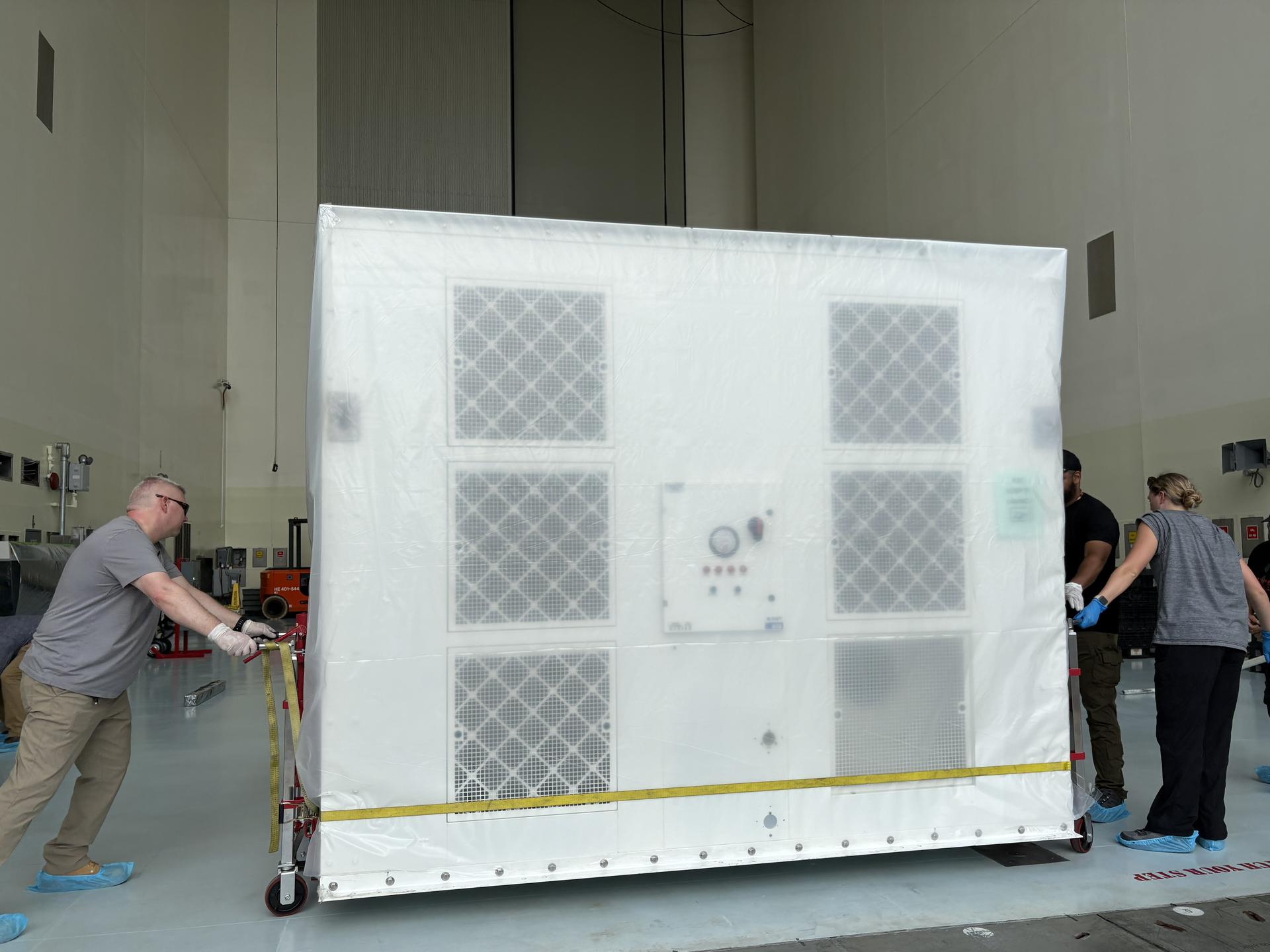
When a flagship observatory like NASA's Nancy Grace Roman Space Telescope is prepared for launch, every particle of dust matters. In April, a critical shipment arrived at the Payload Hazardous Servicing Facility (PHSF) at Kennedy Space Center: eight massive HEPA wall modules—each weighing 1,800 pounds—plus additional ground support equipment. This tutorial explains how these components are delivered, installed, and verified to meet the telescope's extreme cleanliness standards, and why they are essential for the Roman mission's success.
The Roman Space Telescope will use a Wide Field Instrument and a Coronagraph Instrument to study infrared light, dark energy, exoplanets, and the evolution of the universe. To ensure its sensitive optics remain uncontaminated, the PHSF clean room must maintain ISO Class 5 (or better) conditions during spacecraft fueling and other hazardous operations. The new HEPA modules upgrade the facility's air filtration system, providing high-efficiency particulate air (HEPA) filtration that removes 99.97% of particles 0.3 microns or larger.
This guide walks through the entire process—from offloading the modules to final integration tests—so you understand the rigorous steps required to protect a world-class space telescope.
Prerequisites
Before the HEPA modules can be installed, the facility and team must meet several conditions:
- Facility Readiness: The PHSF must have its structural supports, electrical connections, and HVAC ducts prepped to accept the new modules. Floor load ratings must be verified for the 1,800-lb units.
- Safety Certification: Personnel must complete hazardous materials handling training, especially for the fueling of the spacecraft with hydrazine and other propellants.
- Clean Room Protocols: All staff must be trained in gowning, airlock procedures, and contamination control. The clean room must be in a validated state before any equipment enters.
- Equipment Calibration: Particle counters, airflow monitors, and pressure differential gauges must be calibrated within the past year.
- Logistics Planning: The delivery route from the transport vehicle to the clean room must be mapped, with temporary barriers and airlock staging areas established.
Step-by-Step Guide to HEPA Module Integration
Step 1: Offloading and Incoming Inspection
On arrival day, the eight modules are offloaded from the truck using a forklift or crane rated for at least 2,000 lbs. Each module is inspected for shipping damage: dents, torn gaskets, or compromised filter media. A visual check under bright light is performed, followed by a particle count test inside the module's sealed shipping bag.
Pro tip: Use a handheld particle counter to sample the air inside the bag before opening. If the count exceeds ISO 8, the module may need additional cleaning or replacement.
Step 2: Pre-Installation Cleaning
Before entering the clean room, each module is wiped down with isopropyl alcohol (70% concentration) using lint-free wipes. All exposed metal surfaces are cleaned, and the filter media is protected by covering the inlet and outlet with tacky mats. The ground support equipment (e.g., lifting brackets, alignment jigs) is also cleaned and bagged.
Documentation: Log the cleaning date, solvent lot number, and inspector ID for traceability.
Step 3: Transport Through Airlocks
The modules are moved through a series of airlocks into the PHSF clean room. The outermost airlock is maintained at a lower cleanliness class (ISO 8), and the inner airlock at ISO 7. Personnel must wear cleanroom suits, hoods, booties, and gloves. Each module is placed on a clean dolly and pushed slowly to avoid disturbing airflow.
Step 4: Positioning and Mounting
At the designated wall location, the module is lifted using a hoist attached to overhead I-beams. The team aligns the module's frame with pre-drilled anchor points in the concrete wall. A torque wrench is used to tighten bolts to the specified value (e.g., 50 N·m). Check level using a bubble level both horizontally and vertically—a 1° tilt can reduce filter efficiency by 10%.
Step 5: Electrical and Ductwork Connections
Each HEPA module has an integrated fan unit (if supplied) and power wiring. The electrician connects the module to the facility's emergency backup power source (usually 480 V, 3-phase). Ductwork from the HVAC system is mated to the module's outlet flange using flexible connectors to isolate vibration.
Common specification: The module should deliver 1,200 CFM (cubic feet per minute) at a static pressure drop of 1 in. w.g. (water gauge). Verify with a manometer after connection.
Step 6: Seal Integrity Test
All joints between the module and wall are sealed with a non-outgassing silicone sealant. After curing (24 hours), a HEPA filter integrity test (DOP/PAO test) is performed. Aerosol particles are introduced upstream of the filter, and a photometer scans the downstream face. Leaks exceeding 0.01% of upstream concentration require re-sealing.
Document the test results in the clean room validation log.
Step 7: System Balancing and Particle Count Verification
Once all eight modules are installed, the airflow is balanced by adjusting dampers. The clean room's target specification: ISO Class 5 (3,520 particles/m³ at ≥0.5 µm). Walk a grid pattern with an optical particle counter, taking 1-minute samples at each grid point (e.g., every 2 feet). If any point exceeds the limit, adjust HEPA module speeds or reposition supply diffusers.
For Roman's fueling operations, the clean room must maintain a positive pressure of +0.05 in. w.g. relative to adjacent areas. Verify with a differential pressure sensor.
Common Mistakes and How to Avoid Them
Mistake 1: Skipping Incoming Particle Counts
If modules are accepted without verifying filter condition, you might later discover contamination inside the filter banks. Solution: Always perform a background particle count before unpacking.
Mistake 2: Improper Torque During Mounting
Over-tightening can warp the filter frame, creating bypass gaps. Under-tightening leaves the module loose. Use a calibrated torque wrench and follow the manufacturer's specifications (typically 40–60 N·m).
Mistake 3: Neglecting Sealant Cure Time
Rushing the seal integrity test before the silicone cures can cause false leaks or seal failure. Allow at least 24 hours at 20°C and 50% relative humidity.
Mistake 4: Forgetting to Record Data
Without proper documentation, the installation cannot be validated for mission use. Maintain a logbook with dates, test results, personnel names, and equipment serial numbers. This is critical for NASA's quality assurance audits.
Mistake 5: Ignoring Airflow Balancing
Even with perfect HEPA modules, poor duct design can create dead zones. Use computational fluid dynamics (CFD) modeling before installation, and validate with real measurements.
Summary
The arrival of eight HEPA wall modules and ground support equipment at Kennedy Space Center is a crucial milestone for the Nancy Grace Roman Space Telescope. This tutorial covered the entire process from offloading and inspection to installation, seal testing, and system balancing. By following the step-by-step guide and avoiding common pitfalls like improper torque or insufficient documentation, teams can ensure the clean room meets ISO 5 standards required for safe spacecraft fueling. The Roman mission, set to launch as soon as early September on a SpaceX Falcon Heavy, depends on these rigorous contamination control procedures to deliver stunning infrared imagery and advance our understanding of dark energy, exoplanets, and the cosmos.